
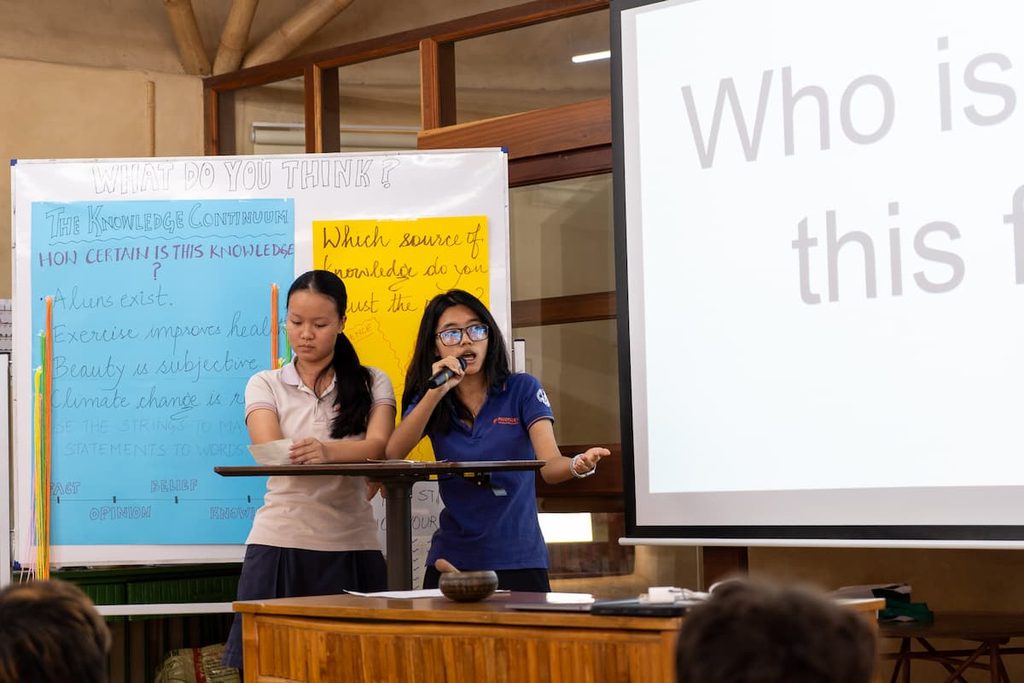
The International Baccalaureate (IB) programme has increasingly become a sought-after alternative to traditional education models in Thailand. Known for its emphasis on global perspectives, inquiry, autonomy, and critical thinking, the IB’s holistic approach contrasts sharply with Thailand’s conventional education system, which continues to rely heavily on rote memorisation and teacher-led instruction. In the Thai context, this philosophical divergence can profoundly influence how students perceive themselves—not only as learners, but as capable and independent individuals. At the core of the IB is a commitment to developing confident, self-motivated learners who can navigate uncertainty and take ownership of their learning journey. These qualities are particularly relevant in a system where many students are accustomed to deferring to authority and reproducing predetermined answers.
IB Approaches That Foster Confidence & Independence
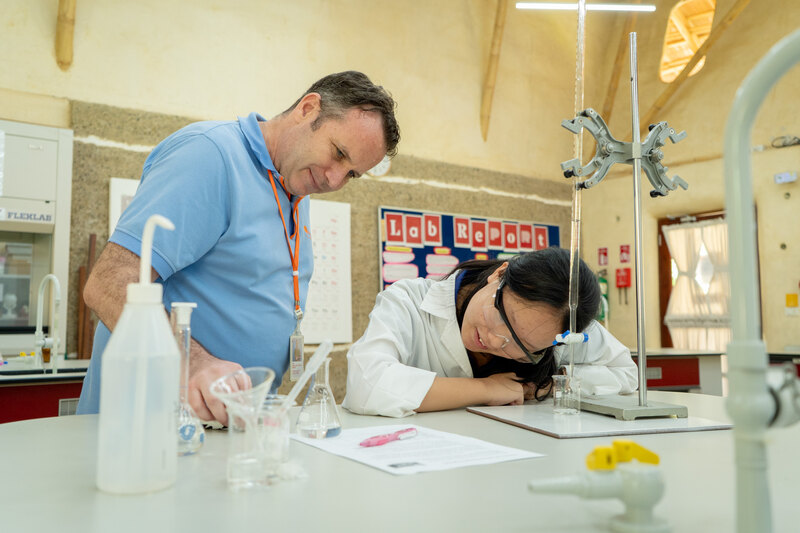
Inquiry-Based Learning Across IB Stages
The IB framework, which spans the Pre-IB programme, Primary Years Programme (PYP), Middle Years Programme (MYP), and Diploma Programme (DP), is intentionally structured around student-led inquiry. In the PYP, young learners are encouraged to pose questions, explore answers, and reflect on outcomes which helps establish a foundation of independent learning early in life. This is extended through the MYP’s focus on conceptual understanding and interdisciplinary investigation, where learners frame issues in global contexts and explore multiple perspectives. In the DP, students refine these habits by engaging in open-ended exploration across subjects. Across all stages, students are taught to take responsibility for their learning, building adaptability, self-trust, and academic persistence which are core attributes of confidence.
Personal Projects and the Extended Essay
Two hallmark assessments which are the MYP Personal Project and the DP Extended Essay, are critical in solidifying student independence. These are not traditional assignments; they are long-form, student-driven investigations requiring sustained initiative, topic selection, time management, and reflective evaluation. The process demands ownership at every stage, instilling a sense of authorship and intellectual autonomy. In successfully completing these tasks, students not only master content but also internalise the belief that they are capable of independently producing valuable academic work hence reinforcing self-efficacy.
Creativity, Activity, Service (CAS)
The CAS requirement of the DP mandates that students actively engage in creative endeavors, physical challenges, and community service. Unlike academic courses, CAS activities are self-initiated and often collaborative, requiring students to set goals, track progress, and assess their development. This experiential learning model cultivates practical independence, emotional resilience, and leadership, complementing cognitive growth with personal and interpersonal development.
Measurable Impacts on Student Well-being and Achievement
Quantitative and qualitative data consistently highlight the IB programme’s positive influence on student development. PYP students demonstrate enhanced emotional well-being and report greater classroom engagement compared to peers in non-IB programmes. In standardised benchmarks like the International Schools’ Assessments, MYP students outperform their counterparts, particularly in critical thinking and writing proficiency. These outcomes are attributed to IB’s emphasis on student voice, inquiry, and reflective practices.
Moreover, IB Diploma Programme graduates often exceed the global average DP score and show marked strengths in academic persistence, self-regulation, and complex problem-solving. These competencies are not only academic indicators but also proxies for personal confidence and autonomy, aligning directly with the IB’s stated mission to “develop inquiring, knowledgeable and caring young people.” This correlation reinforces the idea that IB structures systematically cultivate traits essential to long-term educational and personal success.
IB vs. Thailand’s Traditional System
Thailand’s traditional education model, rooted in repetition and authority, often prioritises content delivery over critical engagement. Classrooms typically emphasise right answers over process, creating environments where conformity is valued more than curiosity. Students are expected to absorb information passively and reproduce it accurately, an approach that can hinder the development of independent thinking and decision-making.
In contrast, the IB curriculum challenges this paradigm. It positions students as active constructors of knowledge, encouraging them to formulate questions, collaborate, and reflect on their learning. This shift in agency fundamentally reshapes student identity: from compliant receiver to autonomous learner. For Thai students, many of whom are raised within hierarchical educational norms, IB schools in Thailand can offer a transformative alternative which not only promotes academic growth, but also a deeper sense of ownership, confidence, and capability.
IB World Schools in Thailand
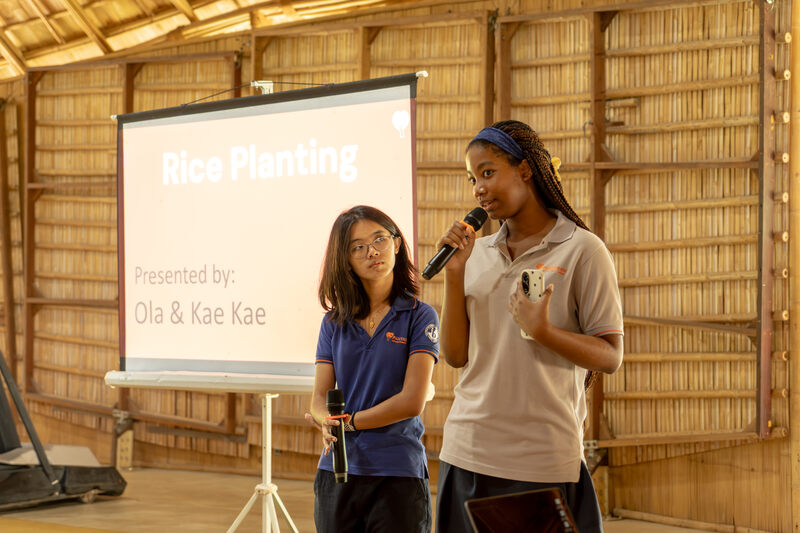
Thailand is home to more than 30 International Baccalaureate World Schools, a number that continues to grow as demand increases for student-centred education models. These institutions span all IB programmes, including the Primary Years Programme (PYP), Middle Years Programme (MYP), and Diploma Programme (DP) are all located across key regions, including Bangkok and Chiang Mai.
In northern Thailand, Panyaden International School in Chiang Mai exemplifies how the IB framework can harmonise with local cultural values while fostering student agency and independence. Known for integrating mindful education with international standards, Panyaden offers a unique blend of the IB’s global outlook with an emphasis on sustainability and emotional intelligence. This alignment enhances the core IB objective: nurturing reflective, confident learners who are capable of directing their own growth.
As one of the leading IB schools in Thailand, Panyaden shows how the International Baccalaureate philosophy can be successfully adapted across the country, particularly in regions seeking progressive alternatives to traditional rote learning. With its expansion both geographically and ideologically, Panyaden highlights the transformative impact of inquiry-based, student-centred. education in Thailand.
Conclusion and Implications
The impact of the IB framework extends beyond academic outcomes, shaping students into confident, independent thinkers who are equipped to navigate real-world complexity. As one of the leading examples among ib schools thailand, Panyaden demonstrates how this philosophy can be meaningfully applied within a local cultural context while maintaining global standards. By embedding inquiry-based learning, reflection, and student ownership into everyday education, Panyaden reinforces the core strengths of the International Baccalaureate, developing learners who not only understand knowledge, but know how to apply it with purpose and self-direction.
As Thailand continues to evolve its educational landscape, schools like Panyaden represent a forward-looking model that bridges tradition with innovation. Rather than focusing solely on academic achievement, this approach nurtures resilience, critical thinking, and lifelong learning habits. For families exploring the international baccalaureate thailand pathway, Panyaden stands as a compelling choice, one that prepares students not just for exams, but for meaningful contributions in an increasingly dynamic and interconnected world.