
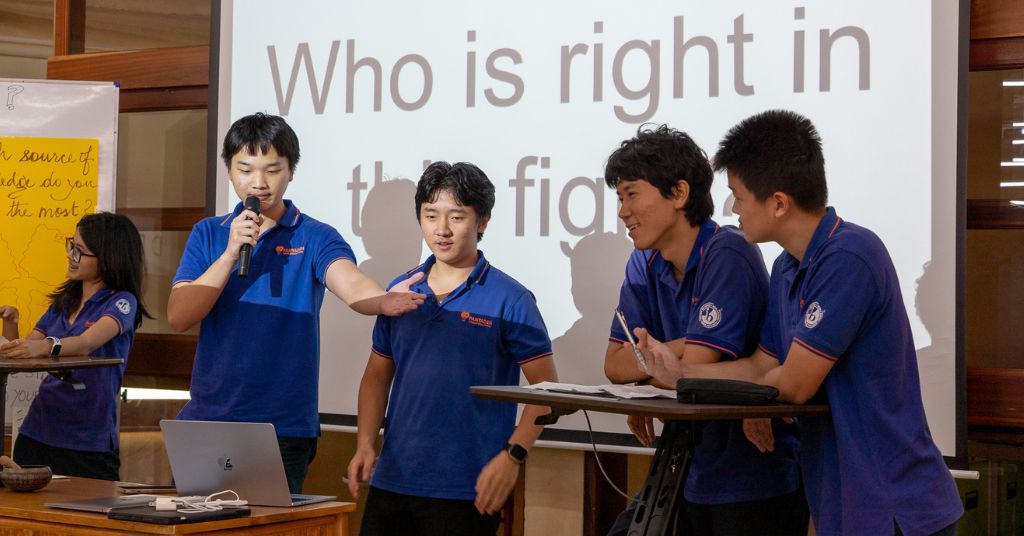
“Will my child lose their Thai identity at an international school?” This question weighs heavily on parents considering the International Baccalaureate (IB) for their children. The answer, backed by decades of educational research and the IB’s commitment to multilingualism, is a resounding no, and Panyaden International School proves it every day.
The IB framework doesn’t merely accommodate multiple languages; it actively celebrates and develops them. For Thai families and expatriates living in Thailand, this means children can become fluent, academically proficient communicators in both Thai and English while maintaining deep connections to their cultural heritage.
What you’ll discover:
- How IB language policy supports Thai language development
- Specific Thai language options at each level
- Why Panyaden’s unique approach preserves cultural identity
- Real benefits for university and career success
What Is IB Multilingualism? The Three Principles
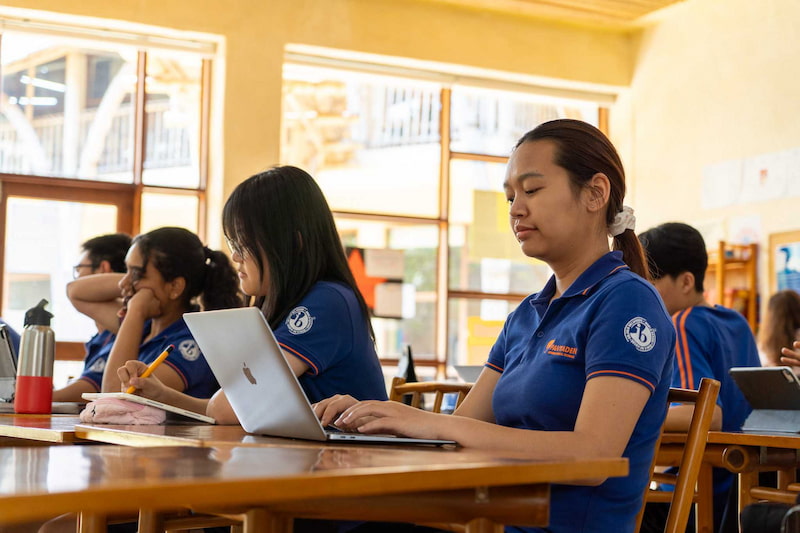
The International Baccalaureate Organization (IBO) holds language development as central to its educational philosophy. Unlike curricula that treat additional languages as optional extras, the IB embeds multilingualism into its core framework through three guiding principles:
Principle 1: Host Country Language Commitment
The IB requires all schools to provide instruction in the host country’s language. In Thailand, this means every IB World School must offer Thai language education appropriate to the local context. This isn’t a concession—it’s a fundamental recognition that language carries culture, history, and identity.
Principle 2: Mother Tongue Support
The IB explicitly encourages schools to support students’ mother tongue languages. Research consistently shows that maintaining and developing one’s first language enhances overall academic achievement, including second language acquisition. For Thai students, this means their native language receives validation and continued development throughout their education.
Principle 3: All Teachers Are Language Teachers
In IB schools, language development isn’t confined to language classes. Every teacher, whether instructing mathematics, science, or the arts, supports students’ language development. This integrated approach builds academic vocabulary across disciplines in multiple languages.
Thai Language Options at Each Level
Understanding the distinction between Language A and Language B courses helps parents make informed decisions about their child’s language pathway.
Thai as Language A (Language and Literature)
Designed for: Native or near-native Thai speakers
Language A courses are academically rigorous, equivalent to first-language study at university level. Students analyze Thai literature, develop sophisticated writing skills, and engage with texts from various Thai cultural contexts.
Assessment includes:
- Paper 1: Guided textual analysis
- Paper 2: Comparative essay
- Written assignment: Creative and analytical writing
- Individual oral commentary
Thai as Language B (Language Acquisition)
Designed for: Thai language learners
Language B courses develop practical communication skills for students acquiring Thai as an additional language. These courses emphasize real-world language use while building academic foundations.
Assessment includes:
- Listening comprehension
- Reading comprehension
- Written productive skills
- Interactive oral activities
Bilingual Diploma Pathway
Students who complete two Group 1 Language A courses (for example, Thai A and English A) qualify for the prestigious IB Bilingual Diploma. This recognition demonstrates university-level proficiency in two languages and is highly valued by universities worldwide.
Beyond Language: Thai Culture at Panyaden
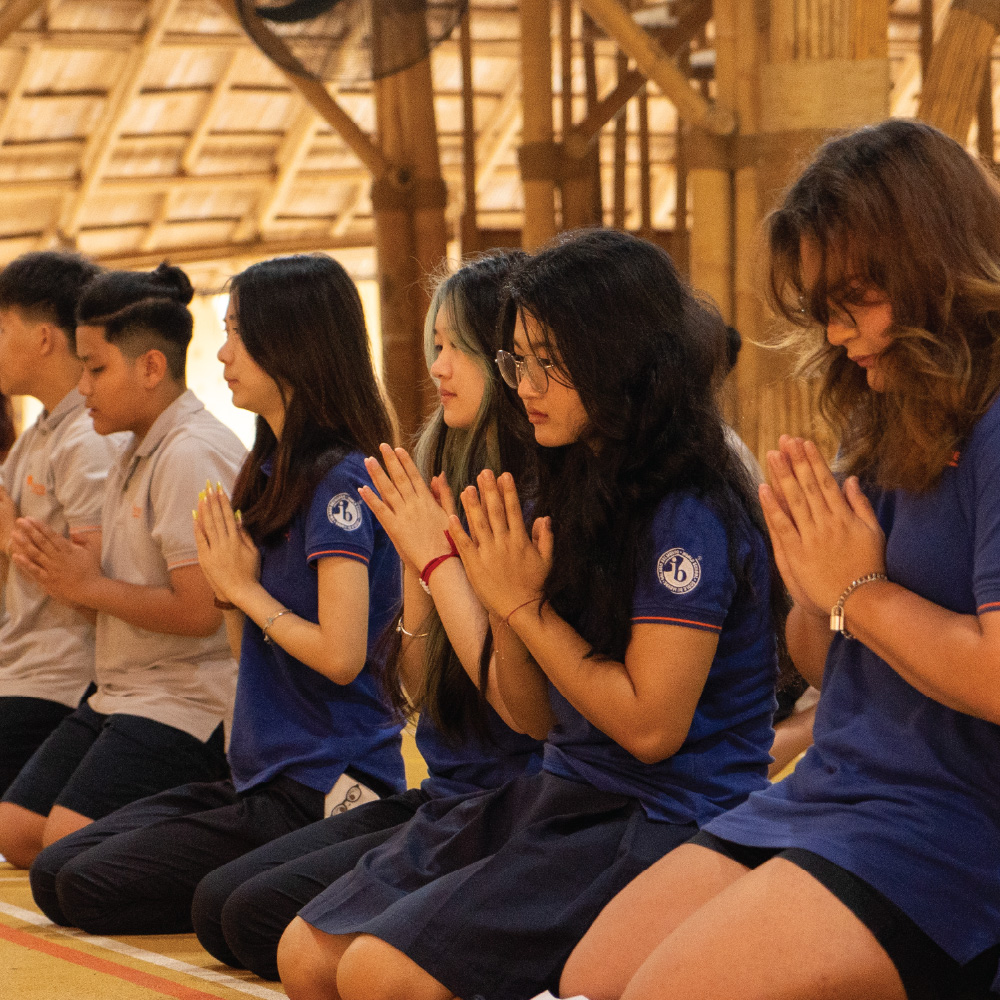
Panyaden International School uniquely combines the IB framework with Buddhist values and deep Thai cultural integration. This approach ensures students don’t just speak Thai—they live Thai culture.
The 12 Wise Habits in Thai Context
Panyaden’s “12 Wise Habits” (derived from Buddhist teachings) are taught and practiced in both Thai and English. Concepts like *Metta* (Being kind and compassionate), *Samadhi* (Being calm and focused), and *Sati* (Being mindful and alert) carry Thai cultural weight while developing vocabulary in both languages [^13^].
Examples of Cultural Integration:
- Morning meditation conducted in Thai
- Wai greeting ceremonies
- Monk blessing events
- Traditional Thai arts (dance, music, crafts)
- Rice planting and harvest celebrations
Environmental Stewardship with Thai Values
Thailand’s Buddhist tradition emphasizes harmony with nature. Panyaden’s bamboo architecture, organic gardens, and sustainability programmes connect environmental education with Thai cultural values. Students learn environmental vocabulary in both languages while understanding these concepts through a Thai cultural lens.
Local Community Engagement
Regular interactions with the Chiang Mai community—temple visits, local market excursions, service projects with Thai organizations—provide authentic language practice while building cultural competence.
Why This Matters: Benefits for Your Child
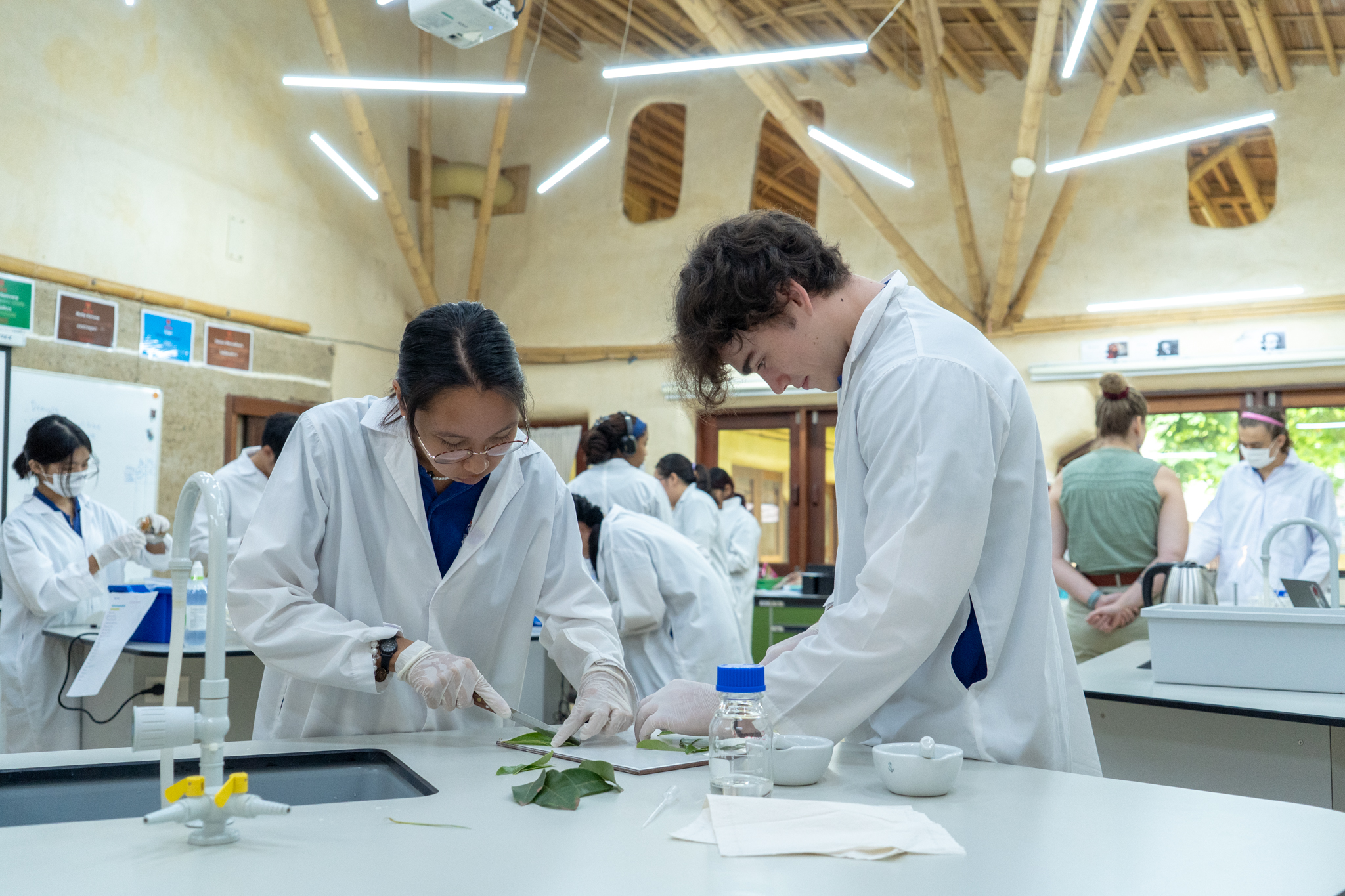
The cognitive, academic, and career benefits of multilingual education are well-documented and significant.
Cognitive Development
Research from Harvard and Stanford demonstrates that bilingual children develop:
- Enhanced executive function (planning, problem-solving, task-switching)
- Greater metalinguistic awareness (understanding how language works)
- Improved memory and attention control
- Delayed onset of age-related cognitive decline later in life
University Admissions Advantages
IB graduates, particularly those with bilingual diplomas, enjoy preferential consideration at universities worldwide:
- UK universities recognize IB Language A courses as equivalent to A-Level English
- US universities value the global perspective and language skills IB students bring
- Thai universities increasingly recognize IB qualifications, with some offering direct entry
IB Recognition Statistics:
- IB qualifications recognized by universities in 100+ countries
- Over 90% of IB students gain admission to their first or second choice university
- Bilingual IB Diploma holders show higher university completion rates
Career Benefits
In an increasingly globalized economy, multilingual professionals command significant advantages:
- Bilingual employees earn 5-20% more than monolingual counterparts
- Multinational companies actively recruit multilingual candidates
- Thailand’s ASEAN integration increases demand for Thai-English bilingual professionals
Cultural Identity Preservation
For Thai families, perhaps the most meaningful benefit is cultural continuity. Children educated in the IB at Panyaden maintain strong Thai language skills and cultural connection while gaining international qualifications. They become true global citizens with deep local roots.
IB vs Other Curricula: Language Focus
Parents often wonder how IB language education compares to British or American curricula. Here’s how they differ:
| Curriculum | Thai Integration | Language Specialization | Assessment Approach |
| IB | Required host country language | Balanced breadth and depth | Mixed (exams, coursework, orals) |
| British | Varies significantly by school | Early specialization (A-Levels) | Primarily exam-based |
| American | Varies significantly by school | Maintained breadth | GPA and continuous assessment |
Key IB Differentiators:
- Mandatory Thai: Unlike British or American curricula where Thai instruction varies, IB requires host country language education
- Academic rigor: IB Language A courses match university-level expectations
- Global recognition: IB language qualifications carry weight worldwide
Ready to Learn More?
Choosing an education for your child is one of the most important decisions you’ll make. The IB at Panyaden offers something unique: world-class international education that strengthens rather than replaces Thai language and cultural identity.
Visit Panyaden to see how the IB framework, combined with Buddhist values and deep Thai cultural integration, prepares students for success in an interconnected world while keeping their cultural roots strong.
Schedule a campus tour to observe Thai language classes in action, meet with our language specialists, and discover how your child can become a confident bilingual communicator ready for any university in the world.
Choosing the right school is not only about selecting an international curriculum, but also about finding an environment where children can grow academically while staying connected to who they are. Through the IB programme in Thailand, Panyaden supports students in becoming confident bilingual communicators, helping them develop strong Thai and English language skills while maintaining a meaningful connection to Thai culture, values, and identity.
At Panyaden, the IB framework is enriched through Buddhist values, environmental learning, community engagement, and a deep respect for Thai language and culture. This allows students to gain a globally recognized education while remaining grounded in local roots, preparing them for future university pathways, international opportunities, and life as thoughtful global citizens with a strong sense of belonging.
Parent FAQ: Your Questions Answered
Q1: Will my child learn Thai at Panyaden?
Yes. Thai language instruction is mandatory and integrated throughout the curriculum. Native speakers develop academic and literary Thai; learners acquire practical communication skills.
Q2: What if my child is a beginner in Thai?
Panyaden provides Thai Language Acquisition courses designed for beginners. The immersive environment—combined with structured instruction—enables rapid progress. Many non-Thai students achieve functional fluency within 2-3 years.
Q3: Can my child take Thai at university level?
Yes. In the Diploma Programme, Thai A: Language and Literature is a university-level course accepted by universities worldwide as equivalent to first-language study.
Q4: What’s the difference between Language A and Language B?
Language A is for native/near-native speakers and involves literary analysis at university level. Language B is for language learners and focuses on practical communication and acquisition.
Q5: Will my child lose Thai skills if we’re expats?
The IB’s emphasis on mother tongue support means expatriate Thai children maintain and develop their Thai language. Panyaden’s community connections also provide authentic Thai language environments.
Q6: How does Thai language help university admissions?
Bilingual IB Diploma holders (Thai A + English A) demonstrate elite language capabilities valued by universities. The IB is recognized by universities in 100+ countries, including all major Thai, UK, US, and international institutions.
Q7: Can my child write the Extended Essay in Thai?
Yes. Students may research and write their 4,000-word Extended Essay in Thai, with appropriate supervision. This is an excellent option for students passionate about Thai culture, history, or literature.
Q8: What about other languages (Mandarin, French, Spanish)?
Beyond Thai and English, Panyaden offers additional language options. Students can study third languages through the IB’s Language Acquisition framework or self-taught options.
Q9: Is there EAL support for English?
Yes. English as an Additional Language (EAL) support is available for students developing English proficiency. The goal is full integration into mainstream classes as English skills develop.
Q10: How do you assess Thai language progress?
Assessment combines formal IB evaluation (in DP), ongoing teacher assessment, and standardized proficiency measures. Parents receive regular reports on language development in both Thai and English.
Q11: Can my child achieve a bilingual IB Diploma?
Yes. Students who complete two Group 1 Language A courses (e.g., Thai A and English A) receive the Bilingual Diploma, a prestigious recognition of university-level proficiency in two languages.
Q12: What if we move to another IB school?
The IB continuum ensures seamless transitions between IB World Schools worldwide. Your child’s Thai language development and IB progress transfer smoothly, whether moving to Bangkok, London, or New York.